Sourcing & Quality
From Pampore to your kitchen — the full story
How our saffron is grown, harvested, dried, tested, and traced — with nothing hidden between the farm and your jar.
The region
The Karewa plateau — irreplaceable terroir
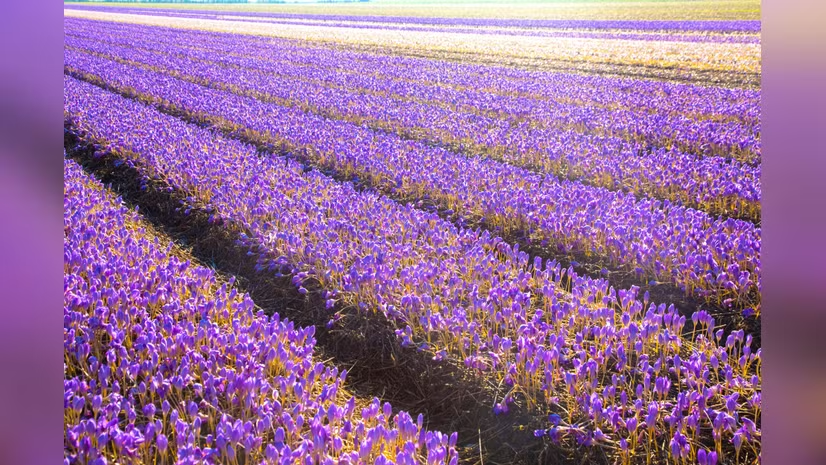
The Karewa plateau of the Kashmir valley sits between 1,500 and 1,800 metres above sea level. Its lacustrine clay loam soil — deposited by ancient lake beds — creates drainage and mineral conditions that cannot be replicated elsewhere. The Crocus sativus grown here produces stigmas with measurably higher concentrations of crocin, safranal, and picrocrocin than the same variety grown in Spain, Iran, or Afghanistan.
The geographic concentration of genuine Kashmiri saffron is small: primarily Pampore, Pulwama, and Budgam tehsils — an area of roughly 3,700 hectares. Production in this region is declining due to urbanization. This makes each harvest more precious than the last.
1,600m
Mean elevation
3,700ha
Total Kashmir saffron land
~150,000
Flowers per kg of dried saffron
2–3 weeks
Annual harvest window
The harvest
Hand-picked before sunrise, every flower
- Season
- Mid to late October, lasting 2–3 weeks depending on weather.
- Method
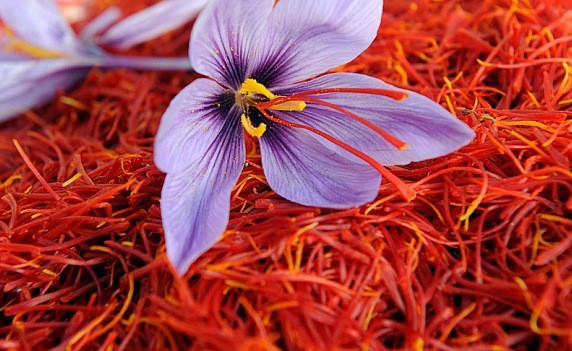
- All harvesting is done by hand, before sunrise, while flowers are still closed — open flowers lose moisture and fragrance fast.
- Yield
- Each flower yields exactly 3 stigmas. It takes 150,000–170,000 flowers to produce 1 kg of dried saffron.
- Drying
- A combination of traditional sun drying and temperature-controlled dehumidification, kept below 12% moisture.
Our farmer partners
Three families, generations of expertise, fair pay above the market
Himalayan Saffron works directly with three farming families in the Pampore region. Each has cultivated saffron for multiple generations. We purchase directly at above-market rates, visit farms in person during harvest, and pay advance deposits to help farmers manage the pre-harvest period without financial pressure.
We do not publish farmer names or exact locations to protect their privacy and security, but we make our COA documentation public and are happy to arrange verified farm visits for serious wholesale buyers on request.
Lab testing process
Five steps from field to certified jar
01
Sample collection
A representative sample from each batch is separated before packing.
02
Independent lab
Samples submitted to a third-party ISO 17025-accredited lab. We do not test our own product.
03
Full panel
Crocin, safranal, picrocrocin, moisture, pesticide residues, artificial dyes, ash content.
04
COA issuance
On passing all parameters, the lab issues a Certificate of Analysis signed by the lab director.
05
Batch stamping
Batch ID applied to all jars from the lot. COA permanently published and available to customers.
Certificate of analysis
What a real COA looks like
Batch ID · HSK-202603-2123-11
Pampore, Kashmir Valley · Harvest October 2025
| Parameter | Result | Grade I spec | Status |
|---|---|---|---|
| Crocin (color) | 212 | ≥ 190 | Pass |
| Safranal (aroma) | 34 | 20–50 | Pass |
| Picrocrocin (flavor) | 86 | ≥ 70 | Pass |
| Moisture content | 9.4% | < 12% | Pass |
| Sudan I/II/III/IV (artificial dye) | Not detected | Not detected | Pass |
| Pesticide residues | Not detected | Not detected | Pass |
| Ash content | 6.8% | < 8% | Pass |